
 Africa market
Fertilizer Supplier to UgandaWholesale Supply via Mombasa & Port Bell
DAP 18-46-0, Granular Urea 46-0-0, Calcium Ammonium Nitrate (CAN), NPK 15-15-15 and more, sourced from approved international origins for importers, distributors, cooperatives and institutional buyers in Uganda.
- Wholesale OnlyB2B buyers
- Mombasa & Port BellDestination ports
- LCL, FCL & VesselShipment options
- FOB / CFR / CIFCommercial terms
- Inspection SupportSGS / Intertek
- Destination Ports
- Mombasa Port (transit via Kenya) • Port Bell (Lake Victoria)
- Shipment Options
- LCL • FCL
- Packaging
- 25 kg • 50 kg • 1 MT jumbo • Bulk
- Commercial Terms
- FOB • CFR • CIF
Fertilizer Supply for Uganda
Key fertilizer products for the Uganda market. Multiple origins available based on your specification.
| Product | Typical Grade | Packaging | Shipment | Action |
|---|---|---|---|---|
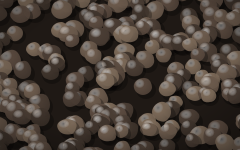 DAP 18-46-0Phosphate Fertilizer DAP 18-46-0Phosphate Fertilizer | 18-46-0 | 25 kg / 50 kg / 1 MT / Bulk | LCL / FCL / Vessel | View Details |
 Granular Urea 46-0-0Nitrogen Fertilizer Granular Urea 46-0-0Nitrogen Fertilizer | 46-0-0 | 25 kg / 50 kg / 1 MT / Bulk | LCL / FCL / Vessel | View Details |
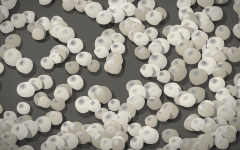 Calcium Ammonium Nitrate (CAN)Nitrogen Fertilizer Calcium Ammonium Nitrate (CAN)Nitrogen Fertilizer | 27-0-0 | 25 kg / 50 kg / 1 MT | LCL / FCL | View Details |
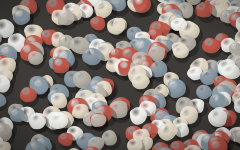 NPK 15-15-15NPK Fertilizer NPK 15-15-15NPK Fertilizer | 15-15-15 | 25 kg / 50 kg / 1 MT / Bulk | LCL / FCL / Vessel | View Details |
 Ammonium SulphateNitrogen Fertilizer Ammonium SulphateNitrogen Fertilizer | 21-0-0+24S | 25 kg / 50 kg / 1 MT / Bulk | LCL / FCL / Vessel | View Details |
Request Fertilizer Offer — Uganda
Wholesale & institutional inquiries only
Shipping Fertilizer to Uganda
Uganda is landlocked; the primary import corridor runs through Mombasa Port in Kenya and then overland via the Northern Corridor (approximately 1,100 km by road or rail to Kampala). Port Bell on Lake Victoria handles some regional trade. Transit from Mombasa to Kampala adds approximately 5–10 days to the ocean leg.
Primary port
Mombasa Port (transit via Kenya)
- LCL & FCL container supply
- CFR / CIF Mombasa Port (transit via Kenya)
- Export documents for clearance
Alternative port
Port Bell (Lake Victoria)
- LCL & FCL container supply
- CFR / CIF Port Bell (Lake Victoria)
- Export documents for clearance
Uganda's fertilizer consumption has grown steadily as smallholder intensification programmes and commercial farming expand. Maize, coffee, tea, banana, and sugarcane are the key crops. Coffee (Robusta and Arabite) drives demand for NPK blends and CAN in the highland districts. Maize and food crops use DAP for basal dressing and urea for top-dressing. Sugar estates use large volumes of urea and ammonium sulphate. Uganda's fertilizer use per hectare remains below regional averages, indicating a structurally growing market.
Uganda's fertilizer market is in a phase of structured growth, supported by government initiatives to improve smallholder productivity and expansion of commercial farm operations. The Northern Corridor via Mombasa is the dominant supply route, making Kenya port logistics an integral part of every Uganda-bound shipment. Coffee and sugar industries are the most commercially active fertilizer buyers, while maize-sector demand is growing with improved variety adoption and output market development.
How we supply Uganda
We supply DAP, urea, CAN, and NPK blends to Ugandan importers routed through Mombasa. We provide full export documentation, COA, and pre-shipment inspection support. Inland logistics from Mombasa to Kampala are typically arranged by the buyer or their clearing agent. All supply is subject to availability, destination regulations, and contract.
Built for Uganda Fertilizer Importers
Global Sourcing
Multiple approved origins depending on grade and availability.
Shipping to Uganda
Mombasa & Port Bell based on your requirement and shipment structure.
Inspection & Quality
COA review and independent inspection where required.
Documentation
Commercial and shipping documents coordinated for import clearance.
Who We Supply in Uganda
- Fertilizer importers and commodity traders
- Agro-input distributors and wholesalers
- Sugar estate and plantation procurement
- Coffee and tea sector input suppliers
- Cooperative unions and NGO input programmes
How Fertilizer Procurement Works
A simple and transparent process for international buyers.
- 01
Tell Us Your Requirement
Product, grade, quantity, packaging and destination.
- 02
We Match Supply
Suitable origin and supplier based on specification and availability.
- 03
Receive Commercial Offer
Price basis, Incoterm, origin, validity and expected shipment.
- 04
Documentation & Inspection
COA, origin documents and inspection requirements confirmed.
- 05
Shipment to Uganda
Cargo coordinated toward Mombasa & Port Bell according to contract.
Importing Fertilizer Into Uganda
Uganda is landlocked — all ocean shipments are routed through Mombasa; buyers must arrange Kenyan transit documentation and inland freight.
The Uganda National Bureau of Standards (UNBS) has product quality requirements for fertilizers; importers should confirm registration and conformity requirements before shipment.
Cargo routed through Mombasa needs Kenyan transit documentation — confirm requirements with your clearing agent.
Uganda Revenue Authority (URA) customs requirements apply at point of entry; the importer's clearing agent handles Uganda-side clearance.
All supply subject to availability, origin compliance, and contract agreement.
Export Documentation
- Commercial Invoice
- Packing List
- Certificate of Origin
- Certificate of Analysis (COA)
- Bill of Lading (to Mombasa) / Airway Bill or combined transport document as applicable
- SGS / Intertek pre-shipment inspection certificate (where requested)
- MSDS / Safety Data Sheet
- Uganda National Bureau of Standards (UNBS) conformity requirements where applicable
- Kenya transit documents for cargo routed via Mombasa (as advised by your clearing agent)
Requirements can change by product, origin, importer status and current regulations. Buyers should confirm current requirements with the relevant authorities and their customs or clearing professionals before shipment.
Frequently Asked Questions
How do fertilizer shipments reach Uganda?
What fertilizer products do you supply to Uganda?
Are there UNBS conformity requirements for fertilizer imports?
Which fertilizers do you supply to Uganda?
How is fertilizer shipped to Uganda?
What is the minimum order for fertilizer to Uganda?
Other Africa Markets
View All Markets
Request a Fertilizer Offer for Uganda
Tell us your fertilizer, quantity, packaging and destination port. We'll assess suitable origins, shipment options and commercial terms.
Wholesale only · Mombasa & Port Bell · International supply